
Paver Patios
A paver patio is only as good as the six inches underneath it. Pavers laid on sand over untouched clay will look right for one season and then start to dish and rock.
We excavate to depth, compact an aggregate base in lifts, and lock the edges so the field cannot spread. That is the difference between a patio that still sits flat in ten years and one that does not.
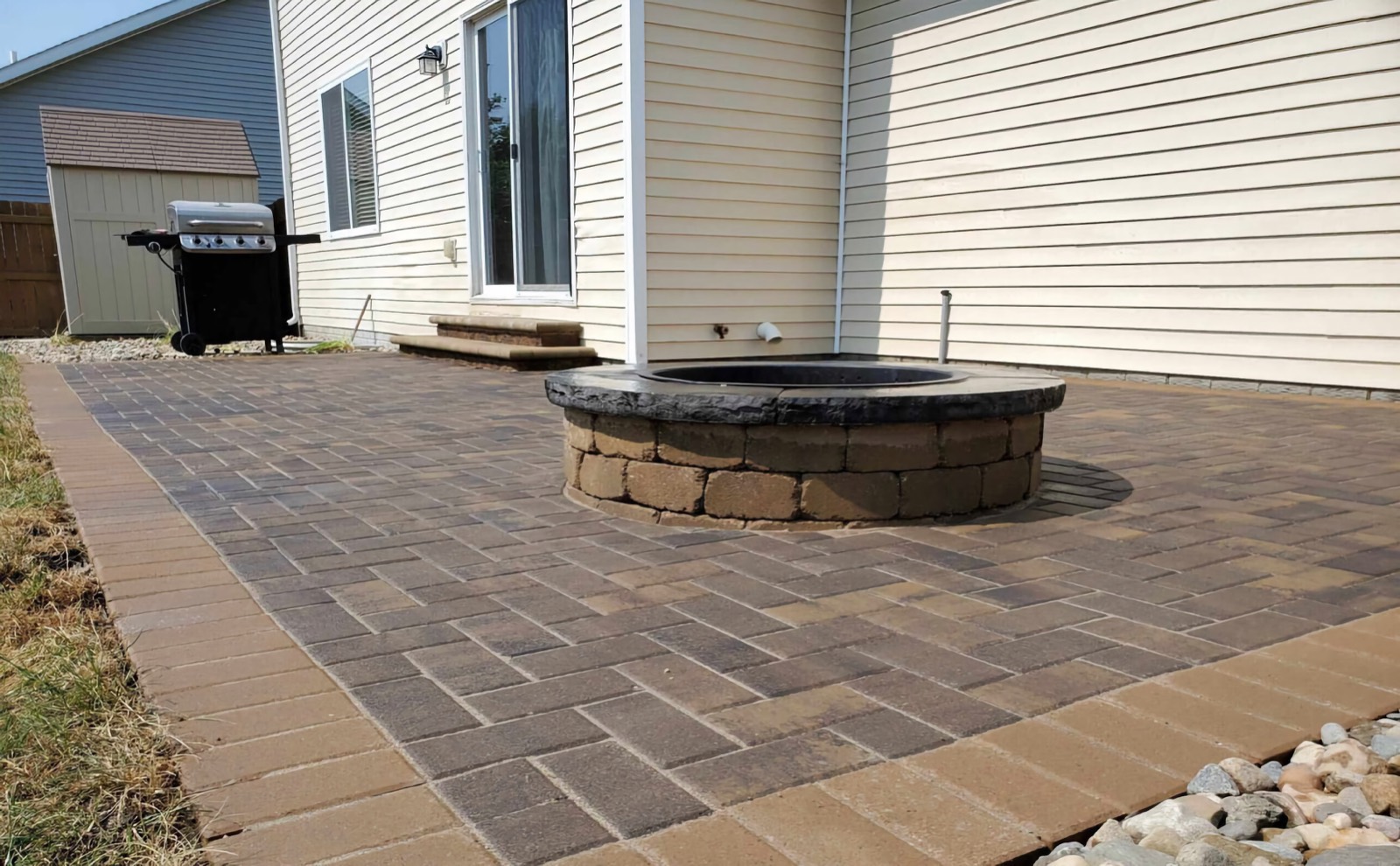
How the work goes
- Excavated and compacted base, built in lifts
- Positive drainage away from the house, always
- Edge restraint so the field cannot creep
- Polymeric joint sand to slow weeds and washout
- Clean cuts at borders and around obstacles
- 01
Lay out and excavate
We mark the shape, check the fall away from the house, and dig out to the depth the base needs.
- 02
Build the base
Crushed aggregate goes in and gets compacted in lifts. This is the step that gets skipped on cheap installs, and it is the one that matters.
- 03
Screed the bedding
A thin, even bedding layer is screeded flat. Not a thick sand cushion, which is where ruts come from.
- 04
Set the pavers
Pavers are laid to the pattern, cut clean at the edges, and the field is compacted into the bedding.
- 05
Lock it in
Edge restraint around the perimeter, polymeric sand swept into the joints, and a final compaction pass.
Paver Patios: common questions
How much should a 20x20 paver patio cost?
A 400 square foot patio usually runs $6,000 to $11,000 installed in this area. The range depends on the paver you pick, how much excavation and haul-off is involved, and whether there are steps, curves or a seat wall.
Is it cheaper to pour concrete or install pavers?
Poured concrete is cheaper up front, usually by a third. Pavers cost more to install and cost far less to repair, because you can lift and reset a section. Concrete cracks in this clay, and a cracked slab is a replacement, not a repair.
Do I need a permit to add pavers to my backyard?
For a ground level patio, usually not. Anything structural, close to a property line, or affecting drainage can be different, and HOAs often have their own rules. We check before we start.
Can I just lay pavers on dirt?
You can, and they will move. Clay holds water, water swells and shrinks the soil, and the pavers follow it. The base is what keeps that from reaching the surface.
Paver Patios across the Upstate
We take this work throughout Greenville and Spartanburg counties.
Related work
-
Retaining Walls
Segmental block and natural stone walls, built on a proper base with real drainage.
Learn more -
Hardscaping
Stone steps, walkways, seat walls and columns that make a yard usable.
Learn more -
Landscape Design
A plan for the whole yard before anybody digs, so the pieces work together.
Learn more
Tell us what the yard is doing.
Free on-site estimate, no pressure and no subscription to anything. We look at it, we tell you what it takes, and you decide.